
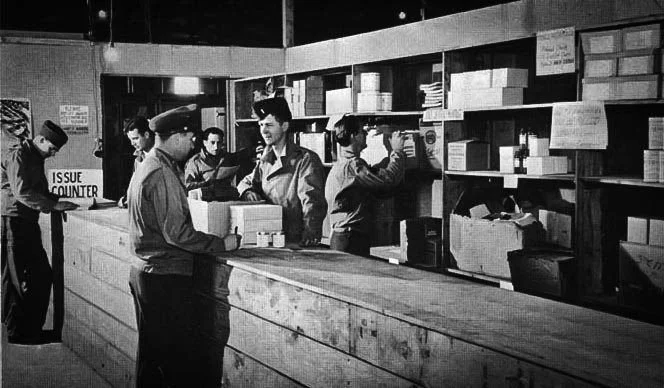
Uniforms & Equipment
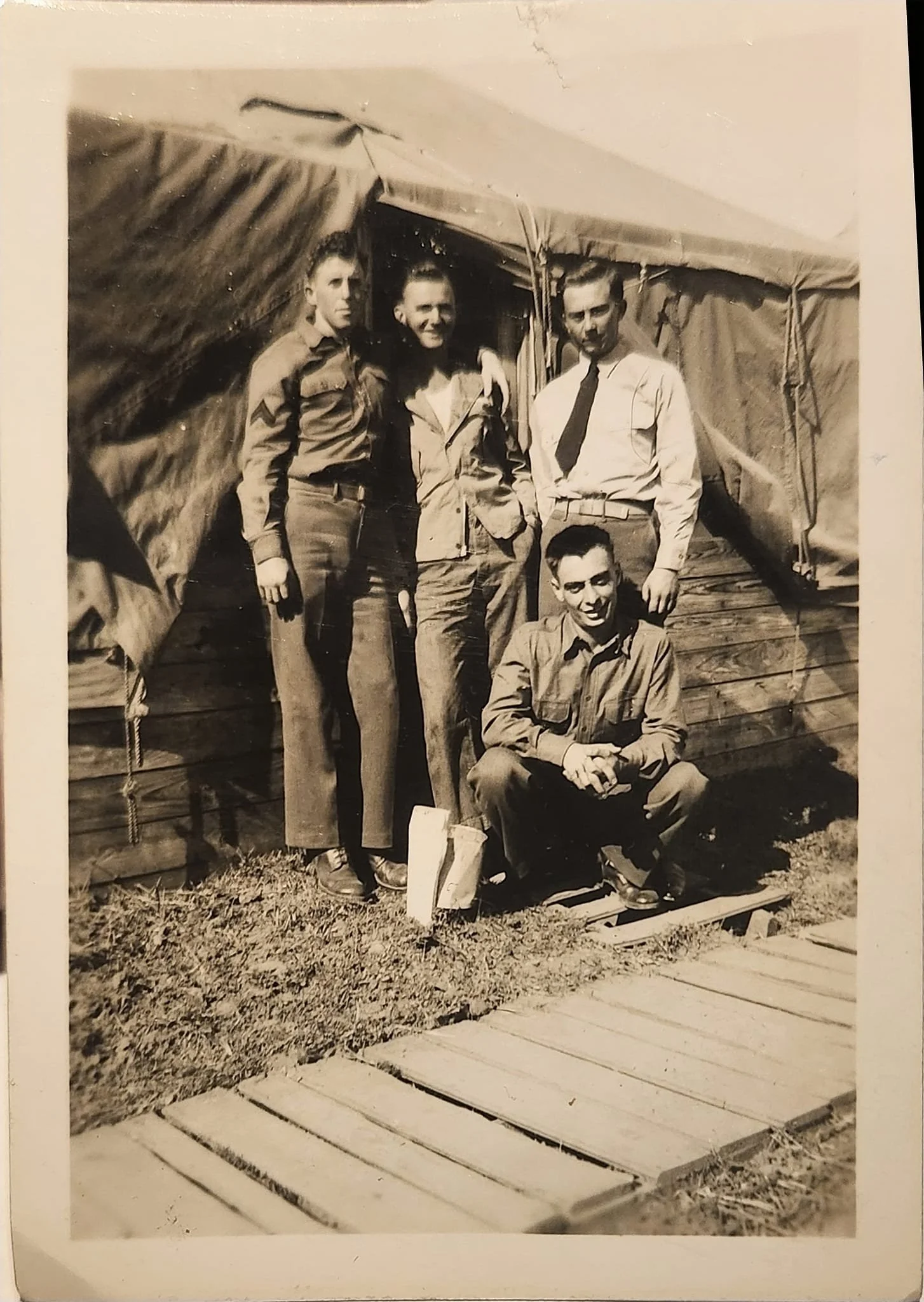
164th Infantry soldiers, while at Camp Claiborne, 1941.
Doughboy to G.I.
Between World War I and the early months of 1941, the American soldier underwent a quiet but profound transformation. The wool-clad “Doughboy” of the trenches, defined by puttees, campaign hats, and the M1917 helmet, gradually gave way to the standardized olive-drab G.I. shaped by interwar reforms, mechanized training, and nationwide mobilization. As National Guard units like the 164th Infantry moved from peacetime drill halls to federal service, uniforms reflected this shift—retaining the traditions of the Great War while embracing the practicality, uniformity, and readiness of an Army preparing for global conflict.
-
From World War I through the eve of America’s entry into World War II, the U.S. Army’s uniforms steadily shifted from trench-era woolens and puttees toward more standardized olive-drab service dress and increasingly practical field clothing—changes driven by modernization, motorization, and the Army’s massive expansion in 1940–41.
-
After WWI, “olive drab” remained the Army’s practical standard for daily wear, with uniforms refined for peacetime service, training, and limited overseas commitments. Interwar uniforms kept the Army’s conservative look—wool service dress, leather shoes/boots, and familiar field gear—while regulations and Quartermaster-led testing slowly shaped what would become the prewar WWII baseline.
-
By the late 1930s, uniform changes increasingly reflected mechanized training, field exercises, and the need for garments that worked better in vehicles, camps, and rough field conditions. This period set the stage for the “early-war” look most Americans recognize: olive-drab wool service clothing in garrison and training, with purpose-built field items beginning to appear as standard issue approached 1940–41.
-
As the Army expanded rapidly, War Department regulations defined what soldiers were expected to wear and how it should be manufactured and colored. The Prescribed Service Uniform regulation in effect by late 1941 formalized adopted cloth standards and specified items (and their materials/colors) for service wear, reflecting a force preparing for large-scale deployment and sustained field operations.